6 Oct 2026
Backend Protocols in Global Betting Infrastructure: Real-Time Outcome Synchronization with Shared Prize Pools
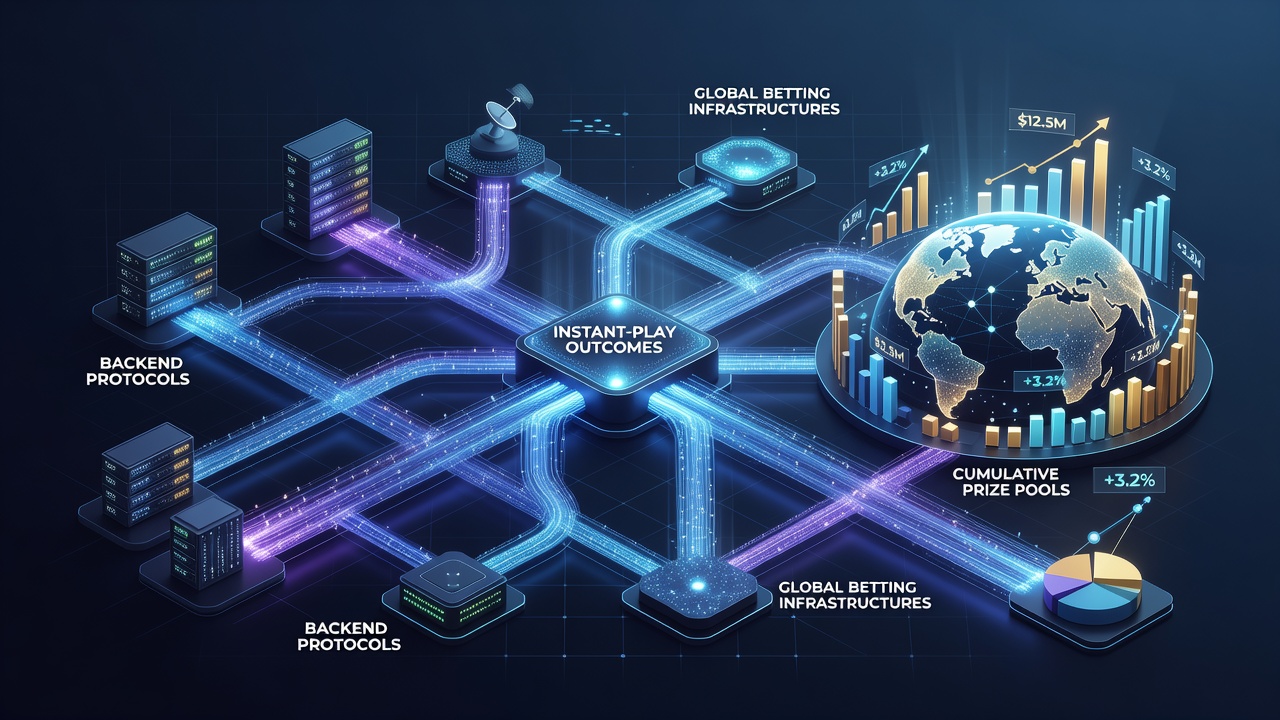 Operators maintain extensive backend architectures that route every spin, hand, or wager result into synchronized databases holding cumulative prize pools. These systems rely on standardized communication layers such as WebSocket channels for sub-second updates and REST endpoints for batch reconciliation. Data packets carrying outcome details travel through encrypted gateways that timestamp each event before appending it to regional ledgers maintained by operators in North America, Europe, and Asia-Pacific jurisdictions. Research from the European Gaming and Amusement Association shows that more than 78 percent of progressive systems deployed by major platforms in 2025 used multi-region replication to keep prize totals consistent across time zones. When a player completes an instant-play round, the result triggers an immediate call to a central pool manager that recalculates contribution percentages and broadcasts the revised total to all connected front-end clients. This process occurs without player-visible latency because the backend separates transaction logging from display rendering. **Core Components of the Protocol Stack**
Several layers operate in sequence. The first layer captures raw outcome data from game servers. The second layer applies regulatory rules that determine how much of each stake feeds the pool versus operator revenue. A third layer handles cross-border currency conversion using live exchange feeds from financial data providers. Finally, a distribution layer pushes updated totals back to display modules on websites and mobile applications. - Real-time messaging buses such as Apache Kafka route outcome events to multiple subscribers simultaneously
- Database clusters using PostgreSQL with logical replication maintain identical prize figures in primary and failover locations
- Compliance modules query jurisdiction-specific rulesets before allowing any pool increment to finalize
Those who manage these infrastructures report that October 2026 brought measurable growth in cross-platform pool participation after several operators completed upgrades to their messaging layers. Figures from the Nevada Gaming Control Board indicate a 14 percent rise in reported progressive contributions during that month compared with the prior year. **Data Flow and Verification Mechanisms**
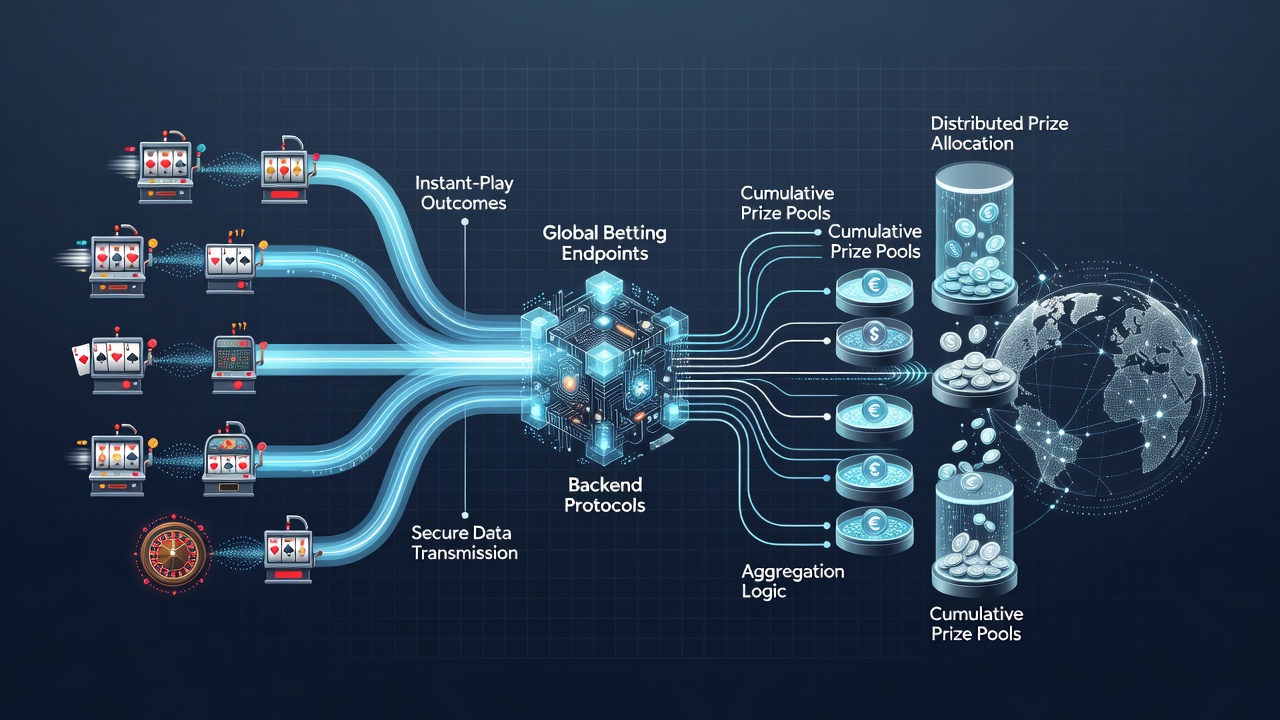
Each instant outcome passes through validation nodes that check for duplicate entries and confirm stake eligibility. Once cleared, the outcome record joins a queue that feeds into the cumulative pool calculation engine. Smart contract-style rule engines evaluate whether the outcome qualifies for bonus multipliers or triggers a pool reset. The engine then commits the change across mirrored databases located in different continents to satisfy local data residency requirements. What's interesting is how these verification steps integrate with external audit trails. Independent testing laboratories receive anonymized logs at regular intervals so regulators can confirm that pool increments match reported handle figures. One study released by the University of Nevada, Las Vegas gaming research center examined 2.4 million progressive transactions from 2025 and found error rates below 0.003 percent when automated reconciliation ran every 30 seconds.
 **Regional Variations in Implementation**
Platforms licensed in Malta follow technical standards issued by the Malta Gaming Authority that require pool totals to update within 800 milliseconds of each qualifying wager. Australian operators under oversight from state regulators in New South Wales and Victoria employ additional checksum layers that log every pool adjustment to a government-accessible repository. Canadian provincial systems in Ontario use similar architectures but add mandatory player-fund segregation checks before any contribution reaches the shared pool. These differences create interoperability challenges that protocol designers address through middleware translation layers. The middleware converts outcome formats from one jurisdiction's schema into a common data model before forwarding the record onward. Observers note that successful implementations reduce reconciliation disputes between operators sharing the same prize pool. **Security and Scalability Considerations**
Encryption standards include TLS 1.3 for all inter-server traffic and hardware security modules for key management. Rate-limiting rules prevent any single game server from flooding the pool manager during high-volume periods. Load tests conducted by several large operators in 2026 demonstrated the ability to process 120,000 outcome events per minute while keeping prize total variance under one cent across all replicas. And yet capacity planning remains ongoing because participation volumes continue to climb. New game types introduced in October 2026 generated additional event streams that required queue partitioning adjustments to avoid processing delays. Those adjustments kept synchronization times stable even as daily transaction counts exceeded previous records. **Conclusion**
Backend protocols that link instant-play results to cumulative prize pools form the operational backbone of modern global betting networks. Through layered messaging, replication, and compliance engines, these systems deliver consistent prize totals across borders and time zones. Continued refinement of messaging speed and regulatory alignment will determine how efficiently operators scale shared pools in the years ahead.
Operators maintain extensive backend architectures that route every spin, hand, or wager result into synchronized databases holding cumulative prize pools. These systems rely on standardized communication layers such as WebSocket channels for sub-second updates and REST endpoints for batch reconciliation. Data packets carrying outcome details travel through encrypted gateways that timestamp each event before appending it to regional ledgers maintained by operators in North America, Europe, and Asia-Pacific jurisdictions. Research from the European Gaming and Amusement Association shows that more than 78 percent of progressive systems deployed by major platforms in 2025 used multi-region replication to keep prize totals consistent across time zones. When a player completes an instant-play round, the result triggers an immediate call to a central pool manager that recalculates contribution percentages and broadcasts the revised total to all connected front-end clients. This process occurs without player-visible latency because the backend separates transaction logging from display rendering. **Core Components of the Protocol Stack**
Several layers operate in sequence. The first layer captures raw outcome data from game servers. The second layer applies regulatory rules that determine how much of each stake feeds the pool versus operator revenue. A third layer handles cross-border currency conversion using live exchange feeds from financial data providers. Finally, a distribution layer pushes updated totals back to display modules on websites and mobile applications. - Real-time messaging buses such as Apache Kafka route outcome events to multiple subscribers simultaneously
- Database clusters using PostgreSQL with logical replication maintain identical prize figures in primary and failover locations
- Compliance modules query jurisdiction-specific rulesets before allowing any pool increment to finalize
Those who manage these infrastructures report that October 2026 brought measurable growth in cross-platform pool participation after several operators completed upgrades to their messaging layers. Figures from the Nevada Gaming Control Board indicate a 14 percent rise in reported progressive contributions during that month compared with the prior year. **Data Flow and Verification Mechanisms**
Each instant outcome passes through validation nodes that check for duplicate entries and confirm stake eligibility. Once cleared, the outcome record joins a queue that feeds into the cumulative pool calculation engine. Smart contract-style rule engines evaluate whether the outcome qualifies for bonus multipliers or triggers a pool reset. The engine then commits the change across mirrored databases located in different continents to satisfy local data residency requirements. What's interesting is how these verification steps integrate with external audit trails. Independent testing laboratories receive anonymized logs at regular intervals so regulators can confirm that pool increments match reported handle figures. One study released by the University of Nevada, Las Vegas gaming research center examined 2.4 million progressive transactions from 2025 and found error rates below 0.003 percent when automated reconciliation ran every 30 seconds.
**Regional Variations in Implementation**
Platforms licensed in Malta follow technical standards issued by the Malta Gaming Authority that require pool totals to update within 800 milliseconds of each qualifying wager. Australian operators under oversight from state regulators in New South Wales and Victoria employ additional checksum layers that log every pool adjustment to a government-accessible repository. Canadian provincial systems in Ontario use similar architectures but add mandatory player-fund segregation checks before any contribution reaches the shared pool. These differences create interoperability challenges that protocol designers address through middleware translation layers. The middleware converts outcome formats from one jurisdiction's schema into a common data model before forwarding the record onward. Observers note that successful implementations reduce reconciliation disputes between operators sharing the same prize pool. **Security and Scalability Considerations**
Encryption standards include TLS 1.3 for all inter-server traffic and hardware security modules for key management. Rate-limiting rules prevent any single game server from flooding the pool manager during high-volume periods. Load tests conducted by several large operators in 2026 demonstrated the ability to process 120,000 outcome events per minute while keeping prize total variance under one cent across all replicas. And yet capacity planning remains ongoing because participation volumes continue to climb. New game types introduced in October 2026 generated additional event streams that required queue partitioning adjustments to avoid processing delays. Those adjustments kept synchronization times stable even as daily transaction counts exceeded previous records. **Conclusion**
Backend protocols that link instant-play results to cumulative prize pools form the operational backbone of modern global betting networks. Through layered messaging, replication, and compliance engines, these systems deliver consistent prize totals across borders and time zones. Continued refinement of messaging speed and regulatory alignment will determine how efficiently operators scale shared pools in the years ahead.